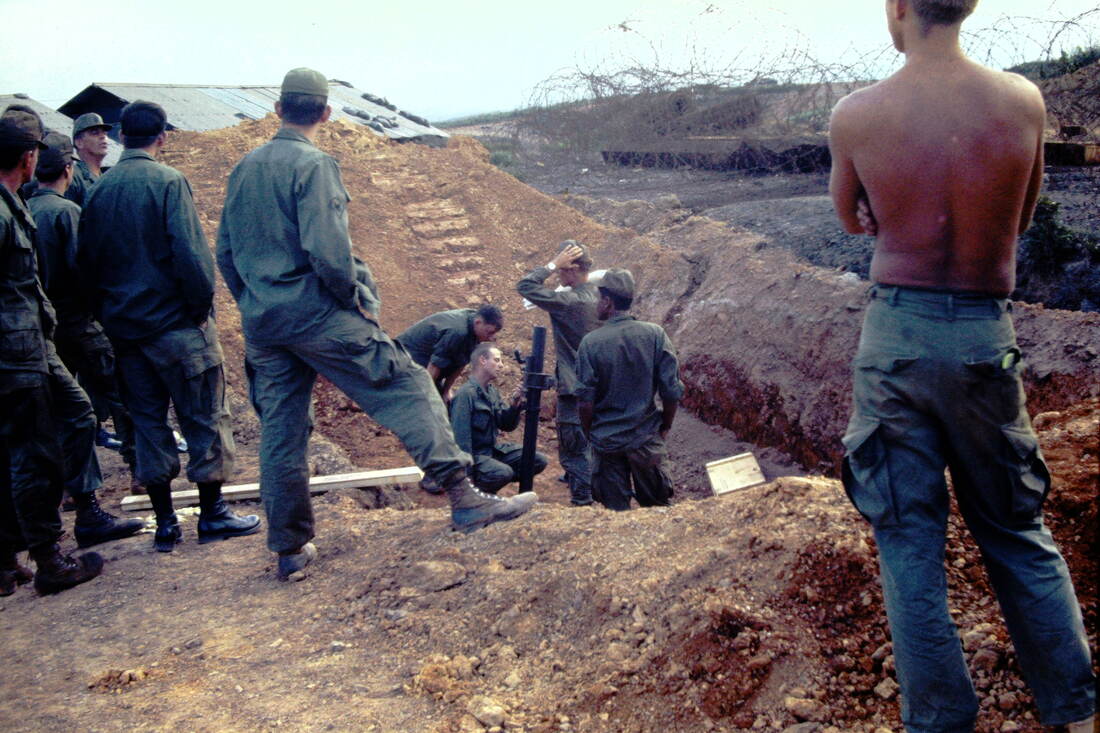
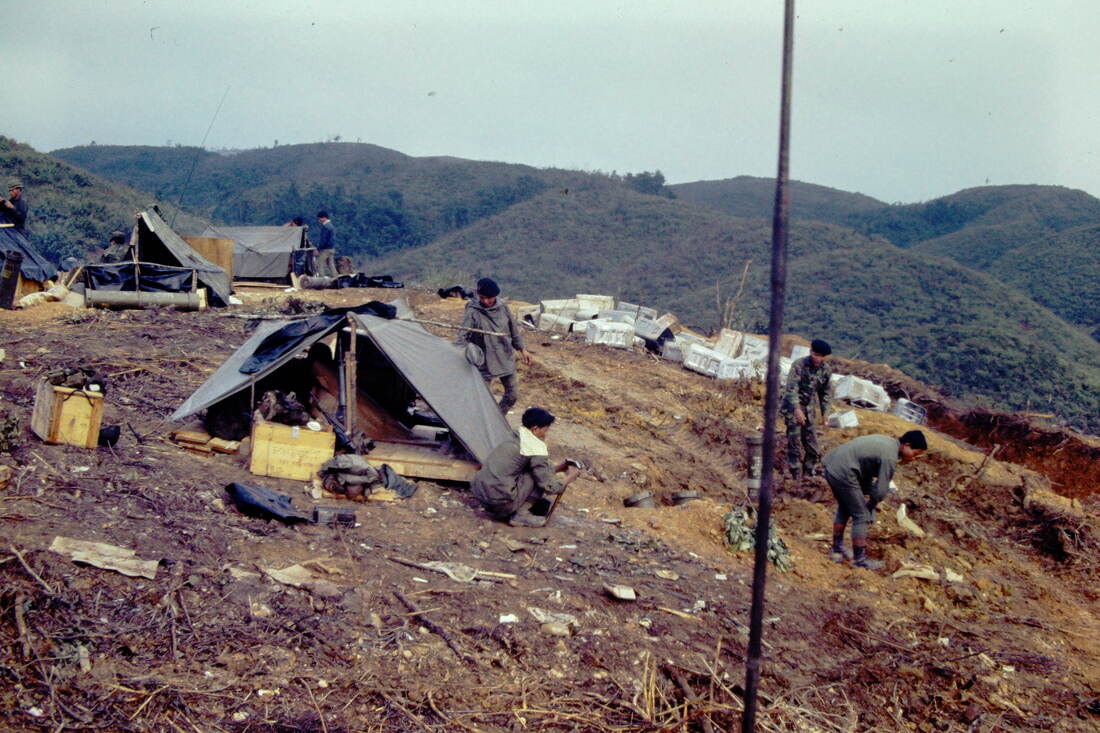
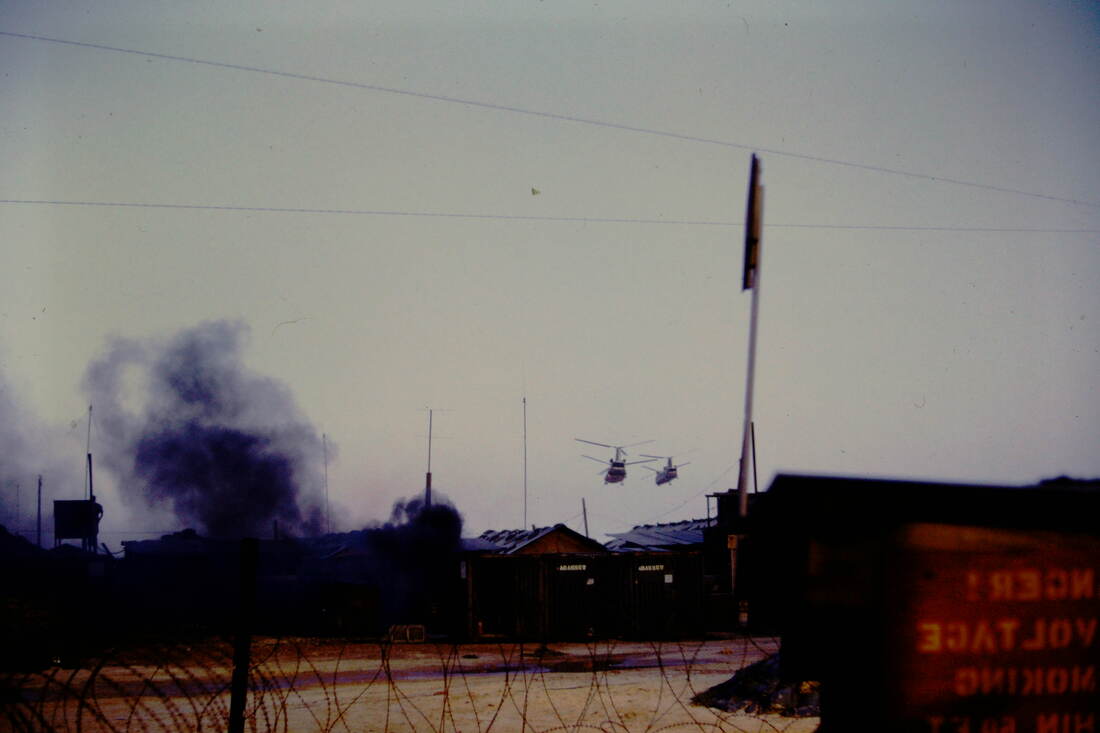
 The baseplate would not come out when it was time to leave. 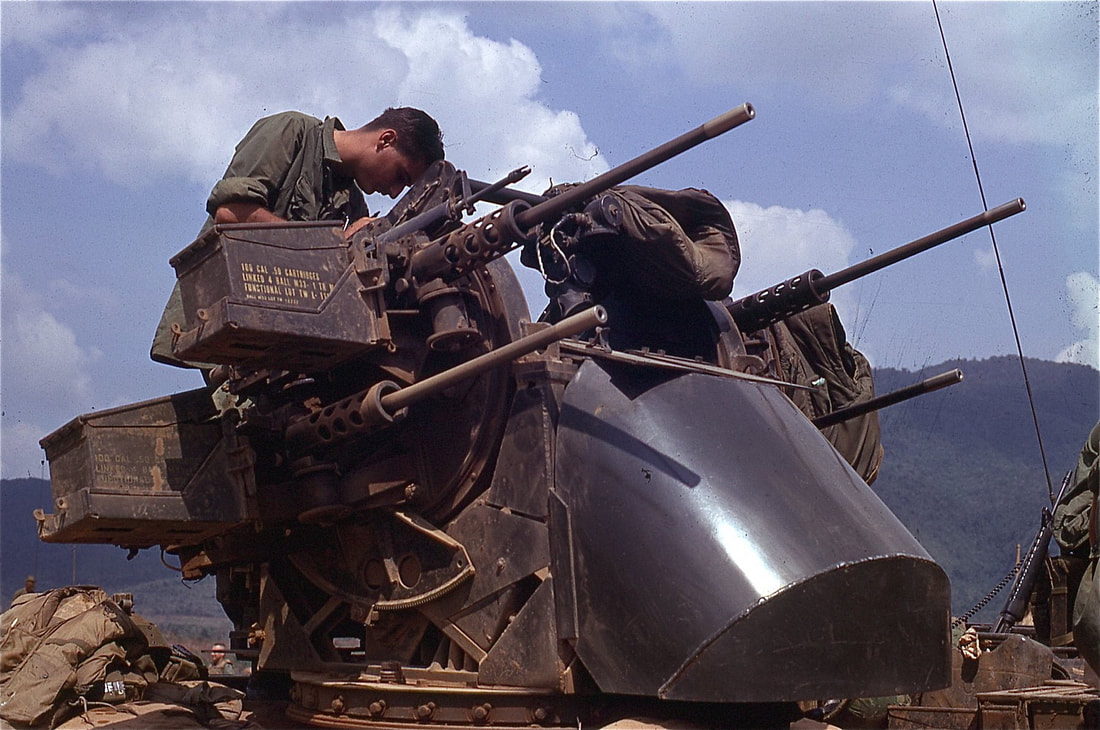 The mortar shot illumination for the quad-50 machine guns protecting us.
0 Comments
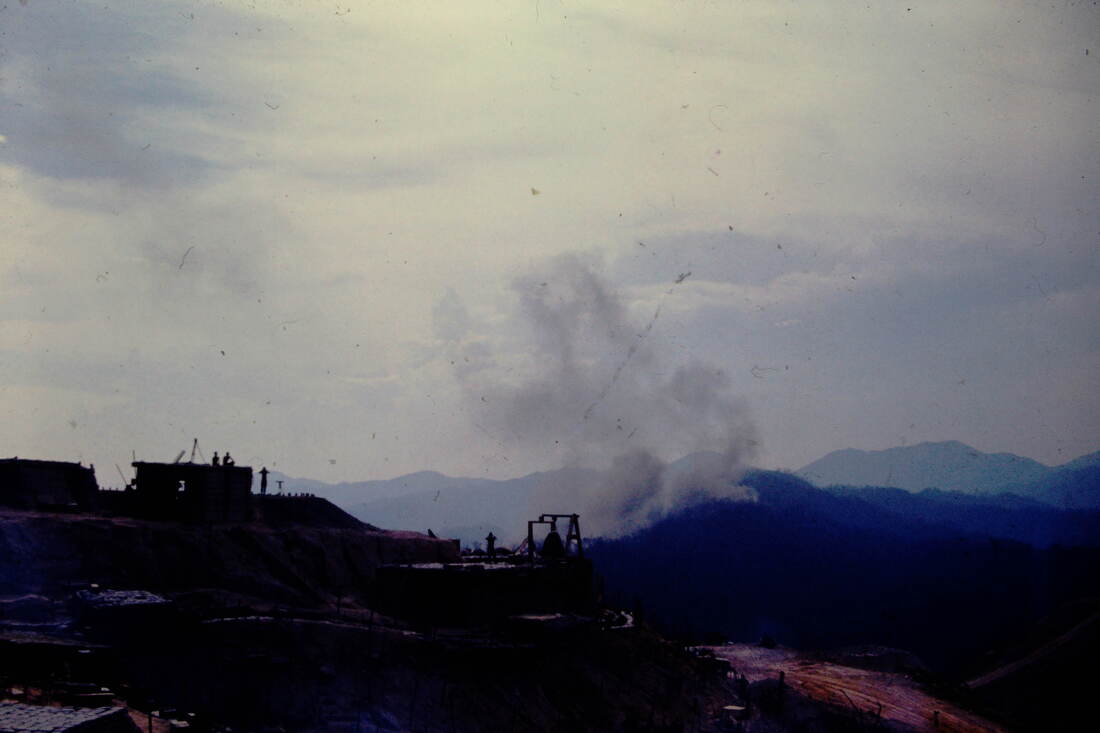
 The Mai Loc zttack occurred near our artillery base, Firebase Barbara. It was marked on our charts as a no fire zone, but we could not suport Mai Loc in any case because it was to the east of us, and our artillery was terraced down the western side of a mountain, intended to fire at the Ho Chi Minh trail, which ran along the Laotian border with Vietnam.
An Account of the attack on Mai Loc fromthe Vietnam wall. Attack on Mai Loc Camp – April 9-10, 1970Mai Loc Camp was a U.S. Army and Army of the Republic of Vietnam (ARVN) base located ten miles south of the Demilitarized Zone separating North and South Vietnam, and west of Quang Tri in Quang Tri Province, RVN. During the late night and early morning of April 9-10, 1970, a company-sized North Vietnamese Army sapper unit attacked Mai Loc. The enemy presence had been detected around 11:00 PM when a trip flare was ignited on the perimeter of the camp, alerting personnel at the base. At 2:35 AM, the camp began receiving some 75-100 rounds of mixed 82mm mortar and rocket-propelled grenade fire, followed ten minutes later by a sapper attack firing small arms and automatic weapons and using satchel charges. A total of 60-80 enemy were reported to have penetrated the outer perimeter at four locations. Civilian Irregular Defense Group (CIDG) troopers, U.S. Special Forces advisors, and U.S artillerymen on self-propelled twin 40mm guns returned fire on the enemy. Heavy fighting from the bunkers was reported inside the camp, and several small counterattacks from within the base repulsed the enemy from portions of the perimeter. The enemy was unable to penetrate the camp’s inner perimeter where the tactical operations center was located. As fighting continued, an element of the 1st Brigade, 5th Infantry Division (Mechanized) in trucks and armored personnel carriers moved into the area and engaged the enemy at about 3:40 AM. Helicopter gunships and a Republic of Vietnam Air Force (RVNAF) AC-47 gunship supported the contact. The remaining enemy began to withdraw, dragging an undetermined number of bodies at the same time. Contact was broken a 4:55 AM. U.S. casualties were six killed, including four members of the 14th Engineer Battalion, and thirteen wounded. The lost Americans included SP4 Francis X. Gaworski, PFC Phillip M. Long, PFC Joseph S. Nemeth, PFC Francis J. O’Reilly, SMJ Gale Stopher Jr., and SP5 Richard L. Whiteman. Fourteen CIDG troopers were also lost. One Vietnamese child was reported killed. RVNAF casualties were light. The bodies of nineteen enemy soldiers were found in the vicinity. Material damage to the base was light to moderate. [Taken from coffeltdatabase.org, wikipedia.org, and “Headquarters MACV - Monthly Summary for April 1970” at ttu.edu]  Willie Austin Willie Austin https://virtualwall.org/da/AustinWx01a.htm
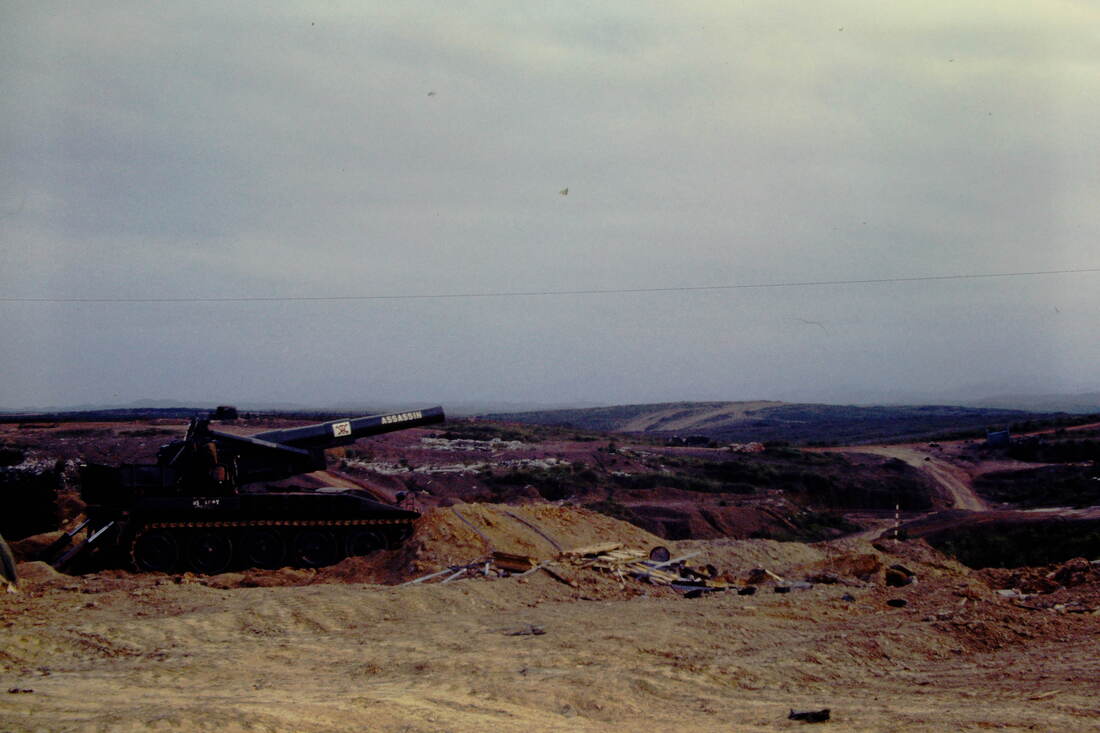
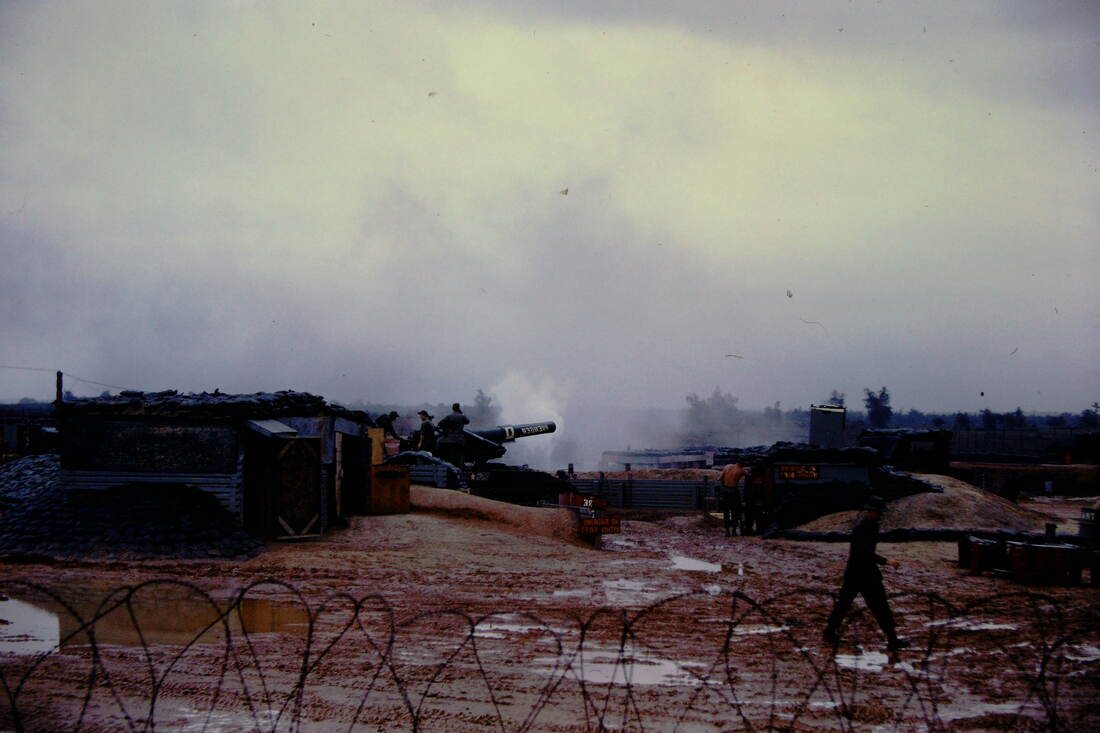
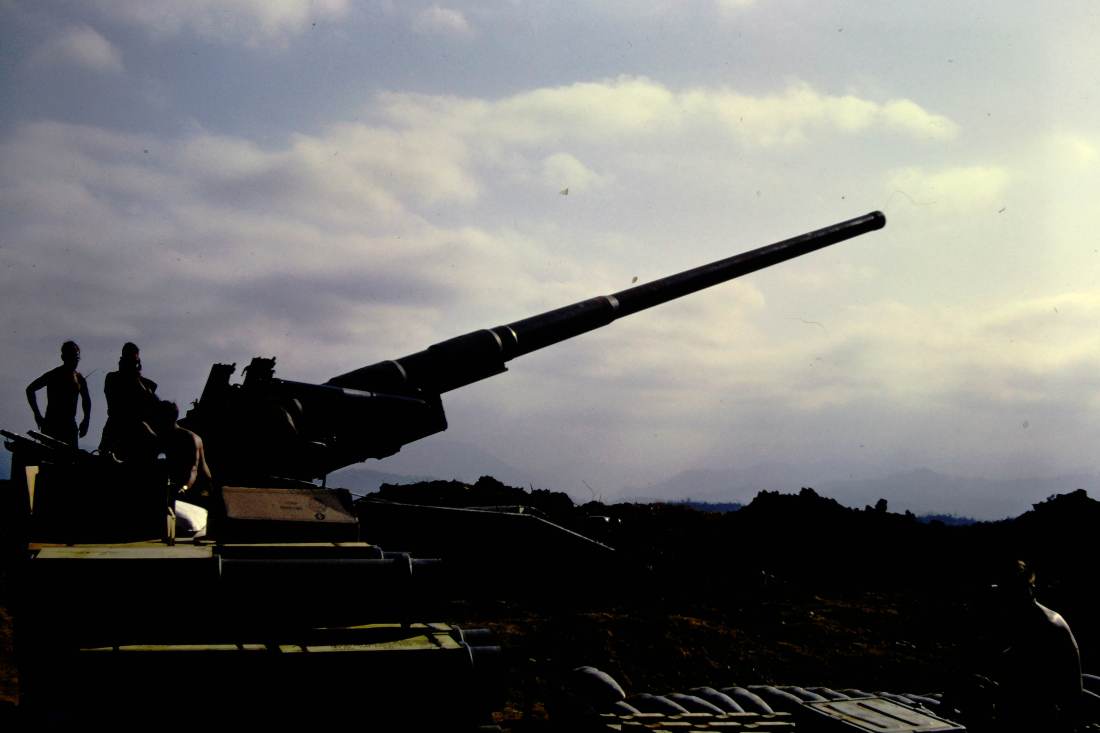
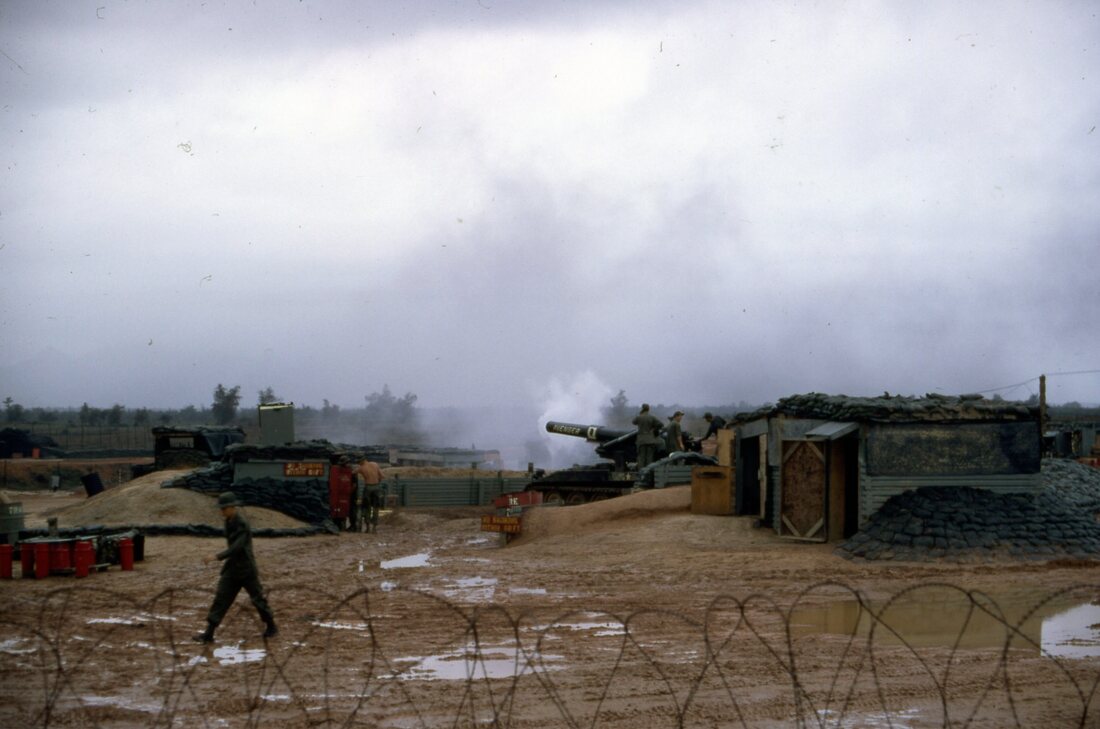 An 8-inch gun firing 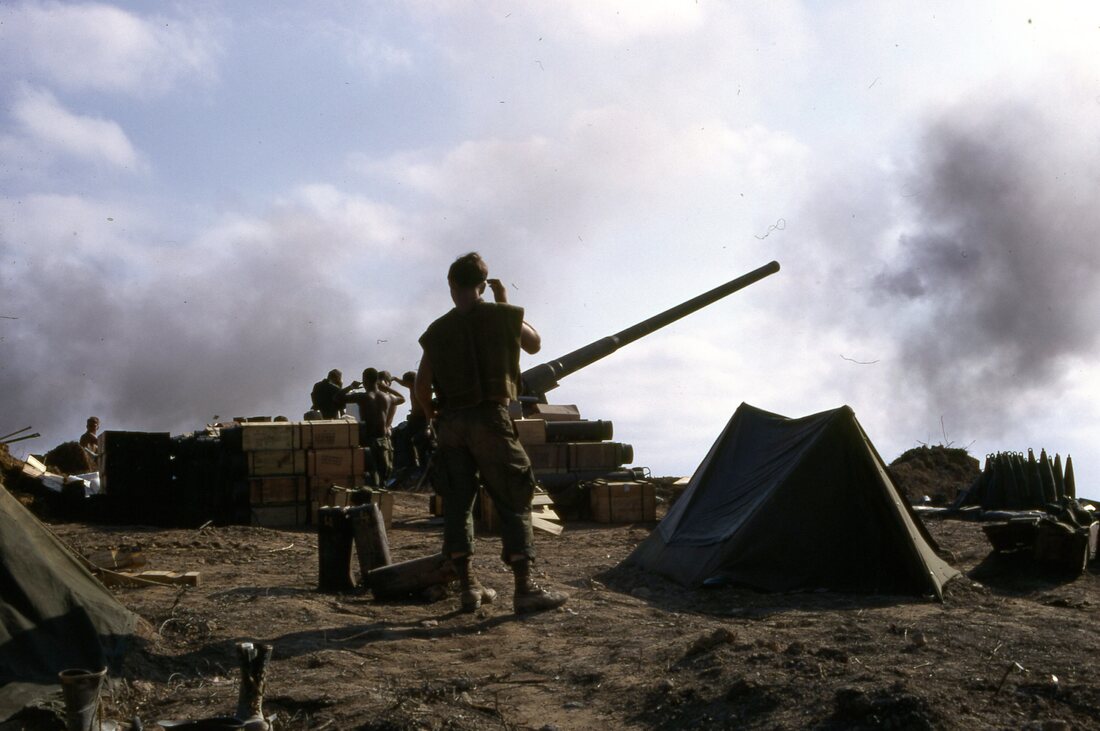 A 175-mm gun firing 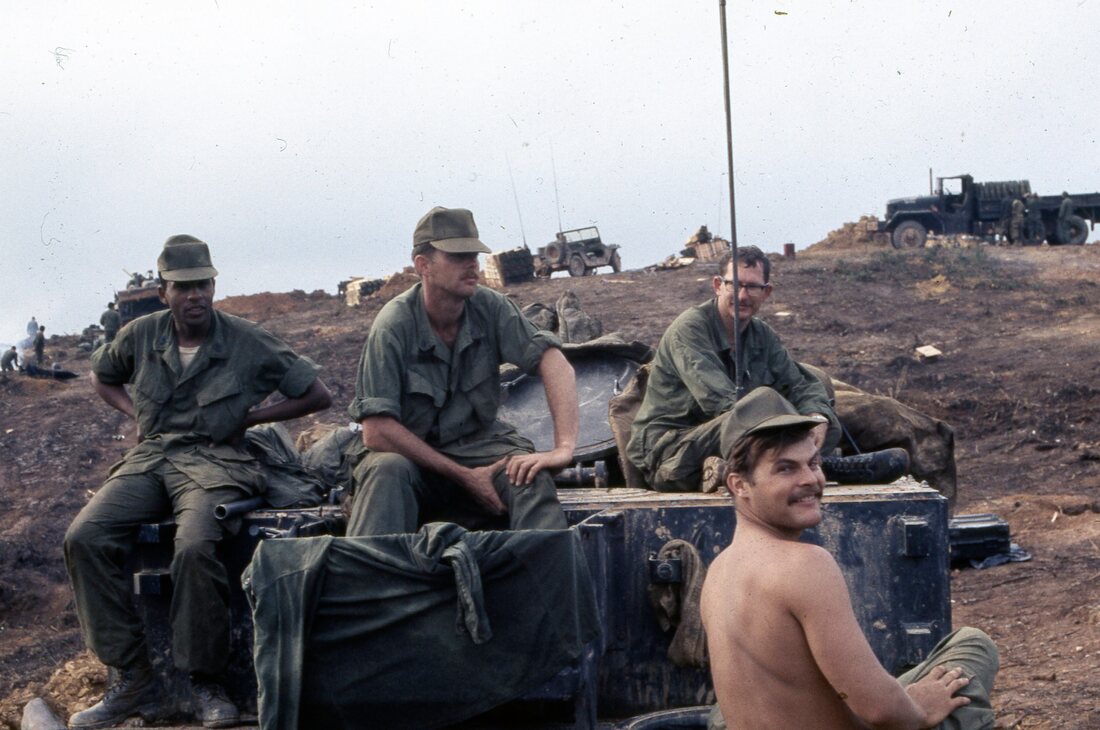 Some of the FDC section on an artillery raid 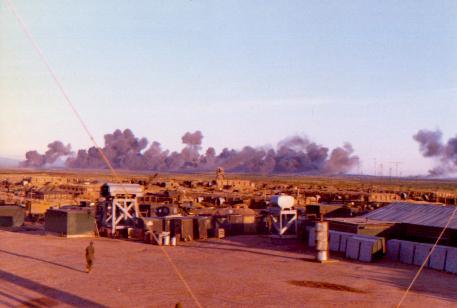 A B-52 Arclight bombing mission on the DMZ, seen from Charlie-1
The Great Firebase Shootout
Keith Nightingale Fire Support Base (FSB) Barbara sits on the last ridge between the Annamite Mountain chain and the low lands of Quang Tri Province. In the arcane language of the Army and its maps, it can be located at YD 330335. The high spiking mountains to the west hide the deep valleys and watercourses that mark the main thoroughfares of the Ho Chi Minh Trail-actually a series of major roads and trails coursing from the interior of North Vietnam to the final low ground of the Delta in South Vietnam. The FSB was built to assist in the interdiction of this complex and vital network. The base itself is somewhat triangular shaped and quite steep on all sides. It sits astride an old French road, QL 9, that winds its way from the ocean to the Lao Border-less than 20 miles as the crow flies. A tortuous dirt track winds its way from the old road to the top of the FSB in a series of switchbacks that twist more than 300 feet from the floor. From the top, a sea of undulating green unfolds revealing both Laos and the ocean plain. A bit to the south but still within artillery range and easily visible in the haze, is its sister FSB, Anne at YD 559039. Both were built by rotating Army and Marine elements and occupied spasmodically over the course of the war as the tides of conflict ebbed and flowed in the province. Now, in the Fall of 1970, it was subject to occupation by the Army-specifically, the 1st Battalion of the 502d Infantry of the 101st Airborne Division. The lead element would be Company D. To this point, the battalion had been operating on the western edge of the A Shau with sporadic contact and relatively light casualties. FSB Barbara had been abandoned for more than six months. There was no information for the assault force on exactly what would be found there. It was assumed that it would have been thoroughly looted by the NVA and probably booby trapped. D Company was assembled near FSB Bastogne in the early morning hours and began to lift out in flights of five UH1H’s, each with 4 or 5 loaded soldiers. The humidity was still unseasonably heavy and the lift ability was limited. It was to be a long day. The plan called for Co’s D and C to occupy Barbara while the battalion CP and Co’s A & B would occupy Anne. A 105 MM arty battery would be slung into each as soon as the bases were cleared and secured. Anne was occupied first as it had been recently occupied and the amenities of life, such as they were, were present. It also had a village relatively close by where ice and fresh foodstuff could be found. Much better for battalion-level personnel. Flying into Barbara was akin to having a moving seat in an Imax theatre. The entire expanse of view was a lush green, intermittently a bright Spring-like green among the fields toward the coast shifting to a dark and brooding density as the mass of the mountains came into view. In the distance but closing, the bare ochre spot in the green that marked the FSB began to emerge. The first helo hovered just above the abandoned bunker at the highest point of the hill. It held steady with the skids less than a yard off the ground. Amidst swirling dust clouds, the troops jumped off from both sides of the aircraft and threw themselves on the ground-an easy act of physics with the ponderous rucksacks on their back. The now empty helo lifted off with a fresh swirl of dust to be replaced by successive waves. As each load departed, the troops now covered in rivulets of sweat outlined by the fine red laterite sand and dirt caked on every exposed piece of skin, fanned out and began clearing the abandoned fire base. By late afternoon, both companies had been lifted in and the base was cleared for the artillery battery. The bunkers were musty and damp with a layer of mud and dirt collected on each floor and exposed horizontal surface. The troops, assigned to specific bunkers along the perimeter began cleaning their homes and making them reasonably habitable by their standards. The leadership walked the perimeter and noted the gaps in the old Marine wire created by the passage of countless NVA scroungers as well as Marine patrol parties. These were quickly stitched closed with the several Chinook loads of material that followed the troop lifts. Last among these loads were the fougas devices. These were 55 gallon drums of napalm to be arranged below each bunker, buried in the hillside and triggered by a Claymore activated from the bunker. The troops hated emplacing them as the Chinook invariably knocked them down with its heavy downdraft and refilled with dirt each bunker that the troops had spent so much time in cleaning. But they did appreciate the defensive value of the devices and took some pride in camouflaging them from casual view. Last loads in were the artillery pieces. These were each slung under a Chinook which usually held both the gun and a net of ammo suspended beneath. Earlier, a battery advanced party had landed as the last UH1H loads and surveyed the old gun positions to confirm positioning. The guns, slung under a hovering Chinook, created huge dust clouds all over the fire base and for more than thirty minutes, obscured the hill from direct observation. From horizon to horizon, it was clear that something was happening-the what to be revealed as the last Chinook disappeared in the distance. The sun began to wane in intensity over the South China Sea as the officers and senior NCO’s went along the entire perimeter, checking firing lanes, claymore positioning and the outpost plans. The artillery battery had settled in and had arranged its guns on the primary chosen azimuth. Artillery from the plains as well as the rifle company mortars registered their fires. The newly opened fire base awaited the night and a potential assault. The enemy now knew full well the size, strength and relative composition of the force on Barbara. It was not a question of if but when they would come. The answer arrived around full dark, shrouding the base from meaningful observation. The attack began in small and unnoticed increments. Quiet, stealthy infiltration in front of each position. Suddenly, the new occupants were overwhelmed and overrun by the primary force in the area-Rats! Rats by the hundreds. Large, dark and extremely hungry. They attacked in singles and in hordes. They searched every bunker, trench line and trail within the FSB. Any part of the new occupants that held the promise of food was thoroughly assaulted. Soldiers asleep with boots off were awakened as a rat bit into the warm, sweaty toes. A stray open can of peanut butter was hotly contested by a dozen as they squealed and shoved aside their brethren to grab a morsel of the remnants. A suddenly awake soldier would turn on a flashlight to see dozens of black forms scurrying on floors, rafters and sleeping companions. With the morning light, an aroused perimeter stood the morning alert and watched the horde descend down the side of the hill to their repose. The two senior officers compared similar stories and sent out exploratory patrols. Shortly, these elements returned with a consistent picture as to the enemy. For months, the previous occupants had used the base of the hill as a garbage dump. They ringed the outer barbed wire barrier with all the detritus of life that the temporary occupiers bring. Ammo crates, empty C ration cans, paper plates from meals, artillery shipping canisters and refuse from long eaten A ration meals piled around the lower wire presenting a feast for the ages. Over time, the rats had multiplied with this military largesse. Suddenly, the fresh daily infusions had ceased and the feast had turned to famine. Just in time C and D of 1-502 appeared to relieve the starving hordes. Finally aware of the source, the leadership held a conclave to determine the best way to reduce the infiltration. A three part assault program was initiated. Part One was a flame assault with C ration cans of gas tossed in the piles and ignited by a tossed flare. This was followed by sacks of Warfarin, flown in with the resupply and spread across the pile the circumference of the hill base. Third and most unique was a contest to judge the most effective bunker by body count in rat eradication. This contest was to last the deployment. Each morning, each bunker and artillery position would produce its body count at Stand To. The tally to be accomplished by an impartial panel of First Sergeants from the two rifle companies and the artillery battery. At the end of the deployment, the winning bunker would be awarded three days at China Beach. Second Place was a two day relief from fatigue details in the rear and Third Place was awarded first in line at the next sporadic A ration meal. None of these were inconsequential to the soldiers engaged. The troops took to this challenge with unbridled enthusiasm and a solid demonstration of American ingenuity. Buckets of water were arranged with well greased flattened C ration cans extending to the middle of the bucket. Dangling on a string just over the water and almost touching the ramp was some enticing morsel. A piece of “Beefsteak” from the B3 unit was judged best for the task. During monsoon boredom, most soldiers had carefully dissected this strange composition into its constituent parts and discovered the remains of an anatomy class within. Ham slices were considered way too valuable for this job. Equally popular by the bunker occupants was the sling shot. Most were created from the fire base medical supplies. Surgical tubing, arranged on an arm brace or IV holder became a deadly weapon within the confines of a dark bunker. The ball bearings from the Claymore became the ammo of choice. The medics noted a rise in lacerations and eye injuries from the ricochet effect within the bunker structures. Phu Bai base was perplexed by the sudden call for tubing and IV/arm braces as no significant contact was being briefed. Most effective however, and the device that created the greatest degree of command engagement and review was the bologna Claymore. This was a team effort by a bunker. The detonating wire and blasting cap from a Claymore was strung out from the bunker entrance to the small dirt road that connected all the perimeter elements on the hill. A piece of bologna salvaged from the occasional lunch meals supplied to the hill was draped over the blasting cap. Those without bologna, used multiple thin slices of Slim Jim’s which virtually everybody had. The really destitute element might employ a combination of crackers and peanut butter. Key was achieving a circumference of food on top of the blasting cap to accommodate the greatest amount of feeders. At dark, each team would place the blasting cap in the middle of the road and cover it with food. Then at a strategic location-but within the space for the bunker (a line constantly adjudicated by the command group), a soldier would carefully hold and aim a flashlight at the feed point. The large personal Maglight was favored over the durable but dim military issue light. A second soldier, designated the clacker, would hold the ignition snap device and lay next to the designated illumination specialist. In the dark, there would be whispered discussions regarding the optimum time to “blow the Claymore.” Given time and obscurity, the rats would gather in a circle around the food and begin to feed inward. Key was illuminating the scene before the food was fully consumed and the feeders dispersal. A light would suddenly shine on the bologna. A dozen or more heads would appear feeding and transfixed. The clacker operator would squeeze the device, the blasting cap explode and decapitate the feeding frenzy. Each morning, the body count would be lined outside each bunker on the street and a joint NCO walk about would tally the results. The ascending totals would be posted at the top of the hill at the Chief of Smoke’s bunker. The use of the Claymore wires became a command issue that was again solved by American ingenuity. The D Company commander asked for an engineer demo squad to assist in “broadening the road” and a good quantity of demolitions material. The unit First Sergeant, sent to the rear on a resupply run, insured the engineers understood what the key supply item was they needed to bring. Every bunker received four blasting caps nightly which they could sequentially re-attach to the Claymore wire. The amount of issued caps became an item of close accountability by each bunker team. Phu Bai received daily reports of the great work the engineers were doing and constantly refilled the blasting cap requests. To maintain decorum, each bunker also had to have an inventory of three complete Claymores in addition to the one behind the fougas barrel. A significant problem became disposal of the night’s body count. Initially, the corpses were just flung over the wire from an entrenching tool. The battalion surgeon and medics complained that this approach was unsanitary. Within three days of the initial assault, the problem became significant as both the stench of rotting corpses and the influx of huge bottle flies reinforced the concern. A solution was achieved when the Chief of Smoke suggested a daily immolation combining both the bodies and the evening’s spare artillery charges. Accordingly, a large pit was dug in the north central side of the base. At the conclusion of the morning body count, each bunker deposited its remains in the pit. These were interspersed with powder grains like a coating of lime. As the final corpse was interred, the remainder of the unused artillery powder and mortar charges were scattered on top. Everyone stepped back and a trip flare was ignited and thrown into the pit. A roar ensued with a very bright intense light of flame erupting from the bowels that would do justice to the Bible’s description of Abraham seeing the light. Disposal issue resolved. While this was going on, the units still had to perform their primary tasks-essentially patrolling the ridges and the road to the west. A skeleton crew was left to man the bunker line as the bulk of the troops deployed at first light. In some cases, a squad or platoon would be required to stay in the bush to establish ambushes. As the contest and its reward was heating up to a major emotional event, a system had to be developed to insure fairness. No opportunity for body count could be missed due to other priorities. The command group, three Captains and three First Sergeant’s devised a plan that seemed to satisfy the situation. All bunkers had to have 3 people at all times. Deployed platoons would leave the short timers, lame or exceptionally proficient behind to maintain the body count. A duty roster was established that insured all squads and platoons were fairly rotated to the bush without losing a significant advantage in the contest. This program progressed over a three week period. Each morning, the accumulated confirmed count was written on a C ration box top and posted at the top of the bunker entrance for all to see. The master list was maintained by the artillery CP and available for examination. The status of each bunker was noted by all who kept up the comparisons like touts at a racetrack. The results were pretty uniform and reflected an enemy that had no prejudices as to ground. The artillery positions were somewhat below average in count which they attributed to their unfair positioning behind the bunkers. Finally, the units were alerted that they would be rotated back to Phu Bai. A sister battalion would replace them. On the final evening and morning of occupation, intensive efforts were made to entice the now seriously dwindling rat population toward a given bunker. Trails of food were left from the bottom wire in a last ditch effort to attract Rattus Rattus into the bunker killing zone. Every position ran an all-night interdiction program piling the carcasses on the road in a guarded poncho to prevent sister bunker depredations and false body counts. Dawn broke and the final census was made by the command group en masse. Results were closely guarded until all corpses had been interred in the burn pit. The winning bunker was # 12, closely followed by Gun Pit #1-the only gun at the edge of the perimeter. Bunker 6 came in a very close third separated by less than 10 from the winner. In all, more than a thousand rats were eradicated. Like the NVA adversaries, they would be beaten one day but return the next. But that was someone else’s problem. Bunker #12 did a check for swim suits and sun tan lotion. The operation was declared a success by the battalion commander and Commanding General who met the troops as they arrived at Phu Bai base. The troops agreed but for a different reason.
After I graduated from college in 1967, it was pretty clear that I would be drafted if I did not maintain my student deferment. I decided that law school would be easier than graduate school in mathematics, and I managed to get into the University of Georgia Law School. After I finished my first year, however, my draft board said no more student deferment. When I went for my draft physical, one of the doctors encouraged me to apply for an officer candidate program that would only mean a two year commitment, like the draft, if I did not get commissioned. As a result I sort of volunteered for the draft with the option of going to officer candidate school. My military career was a bipartisan effort; I was essentially drafted by Lyndon Johnson in 1968 and sent to Vietnam by Richard Nixon in 1969.
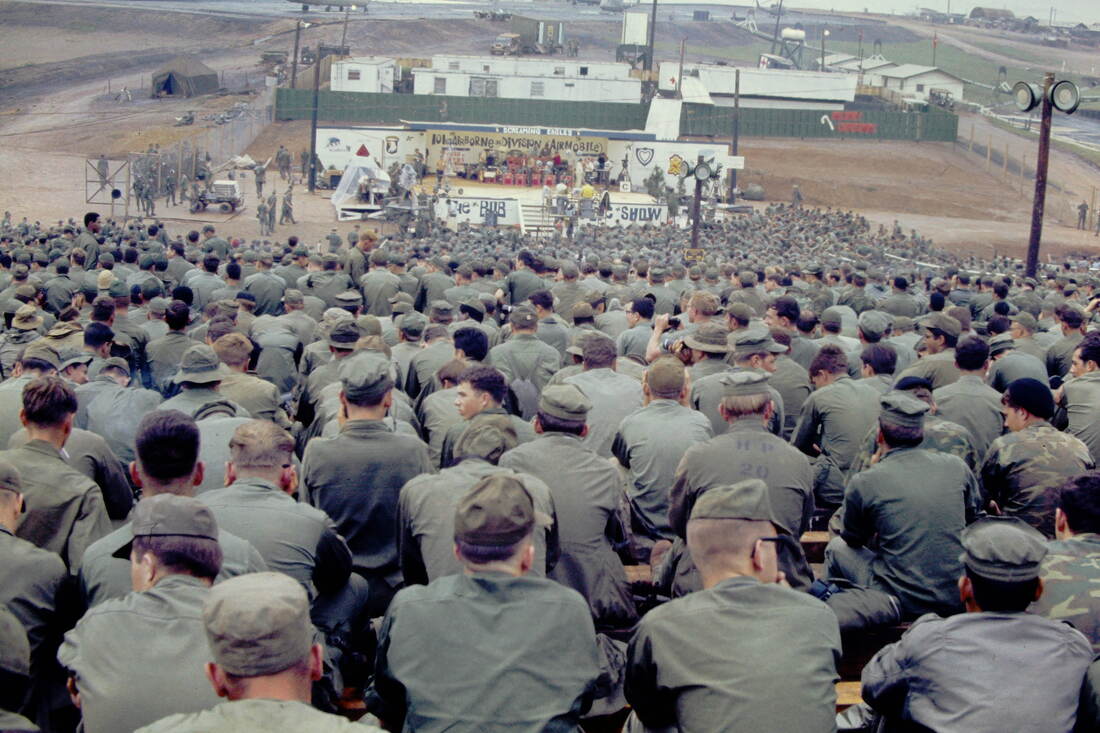
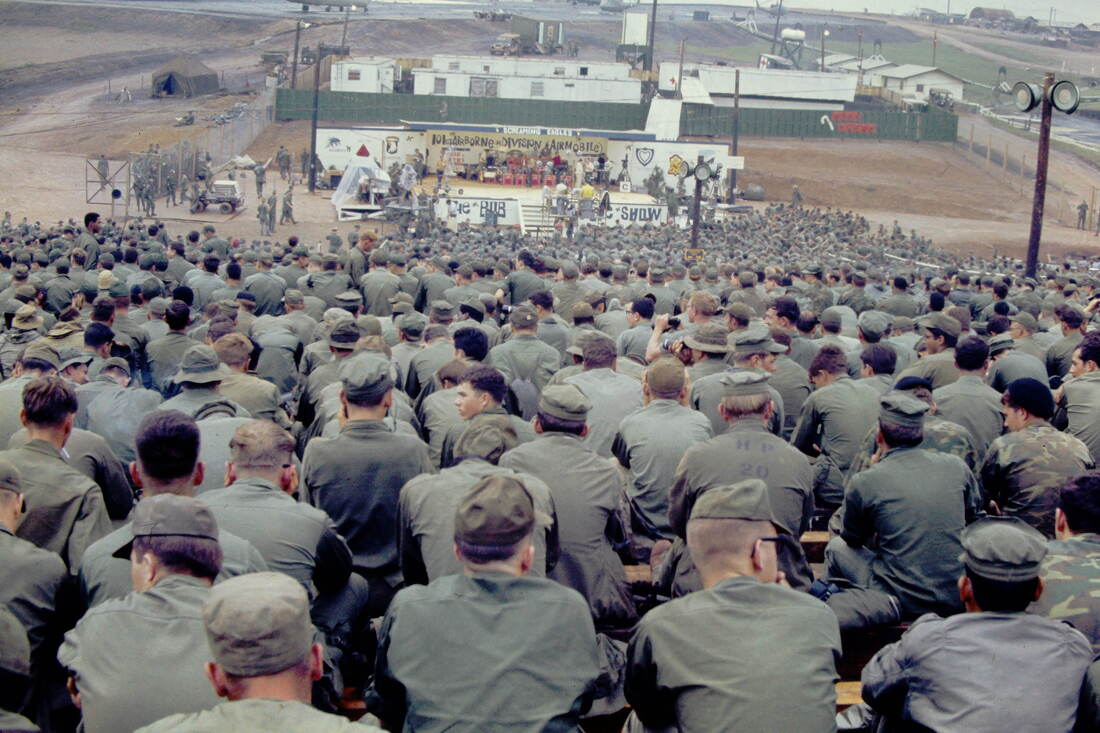
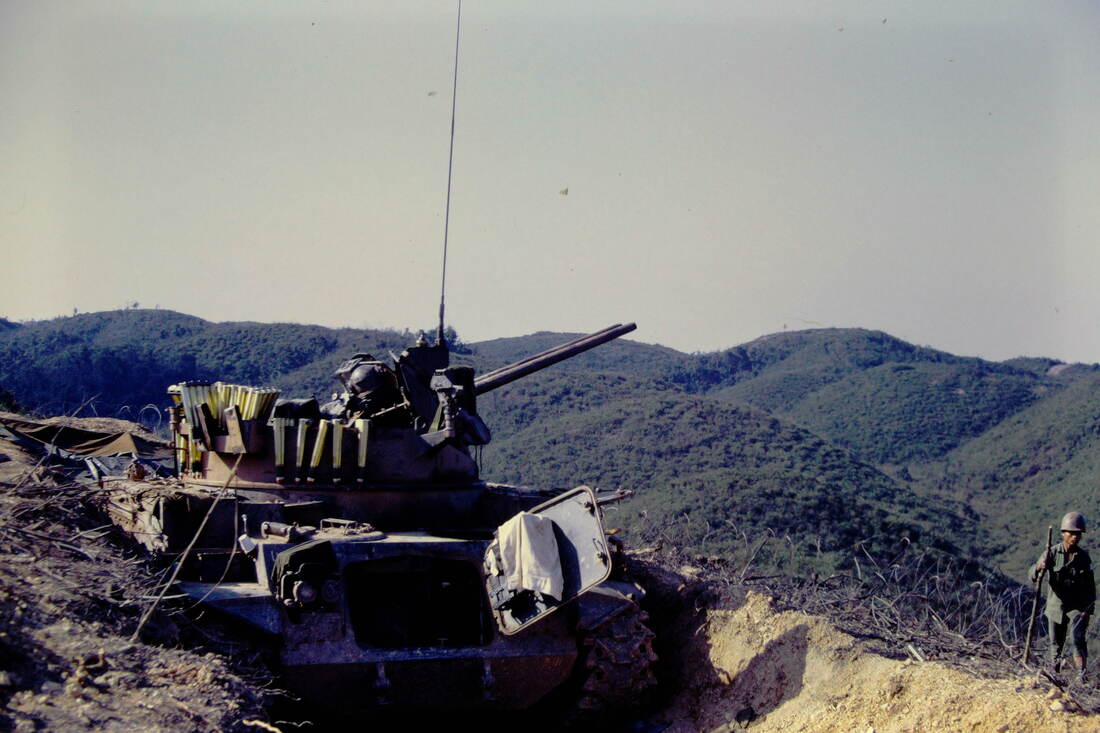
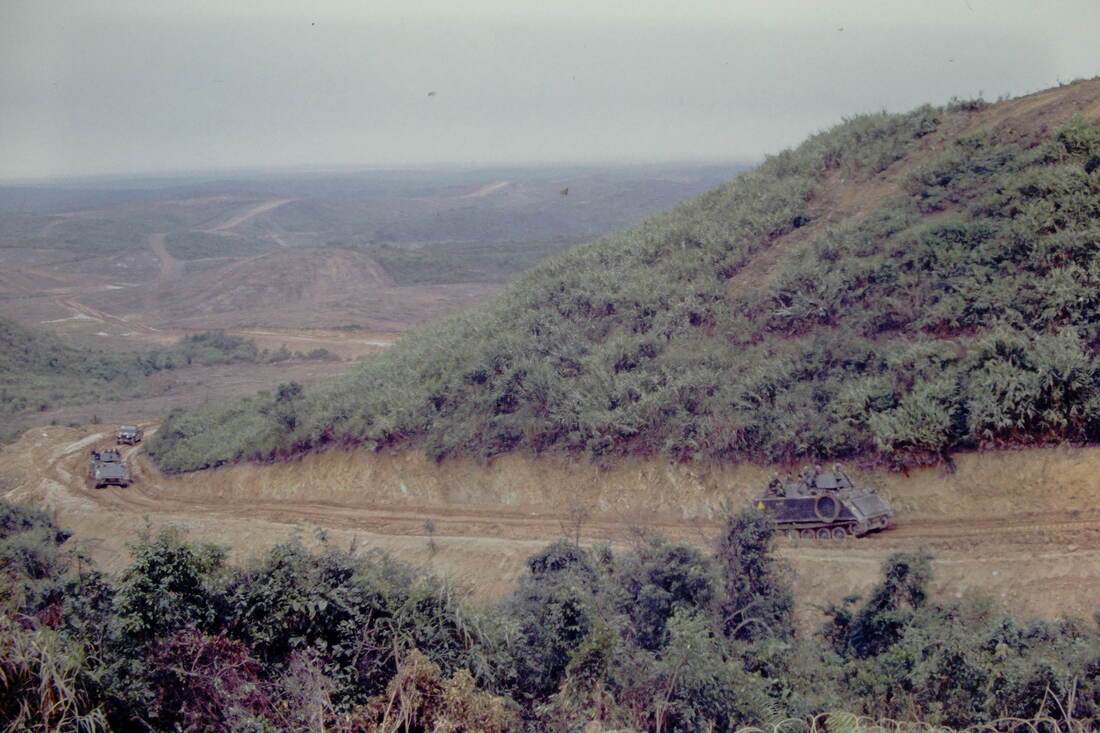
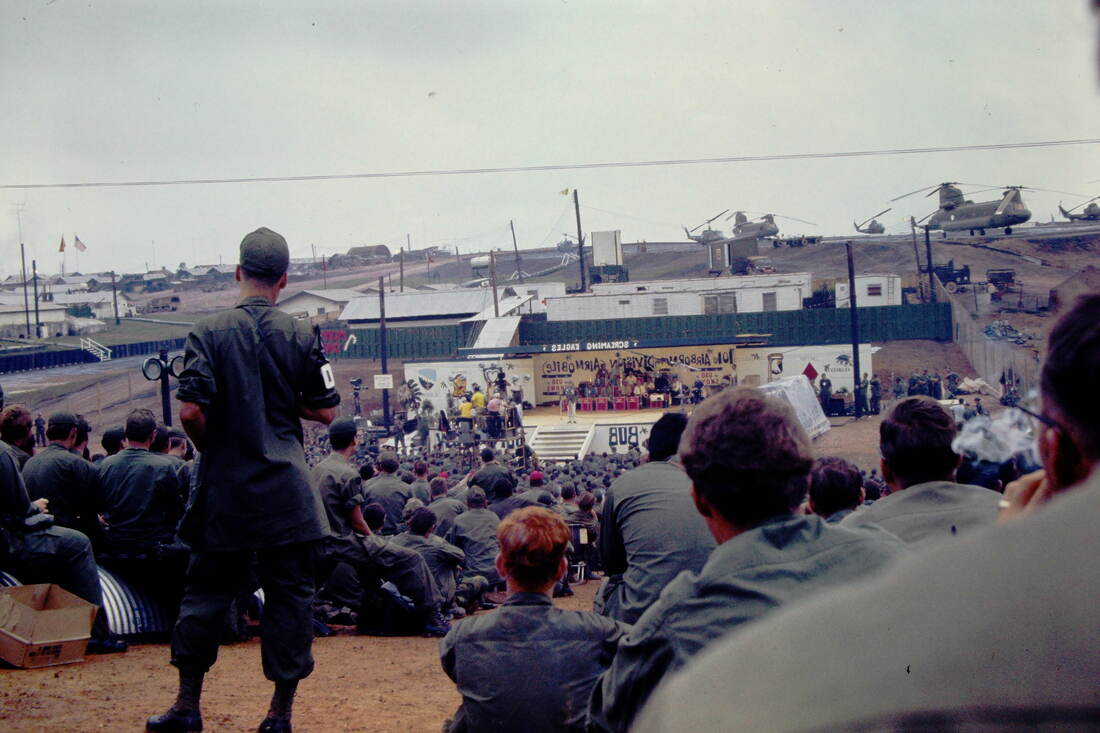
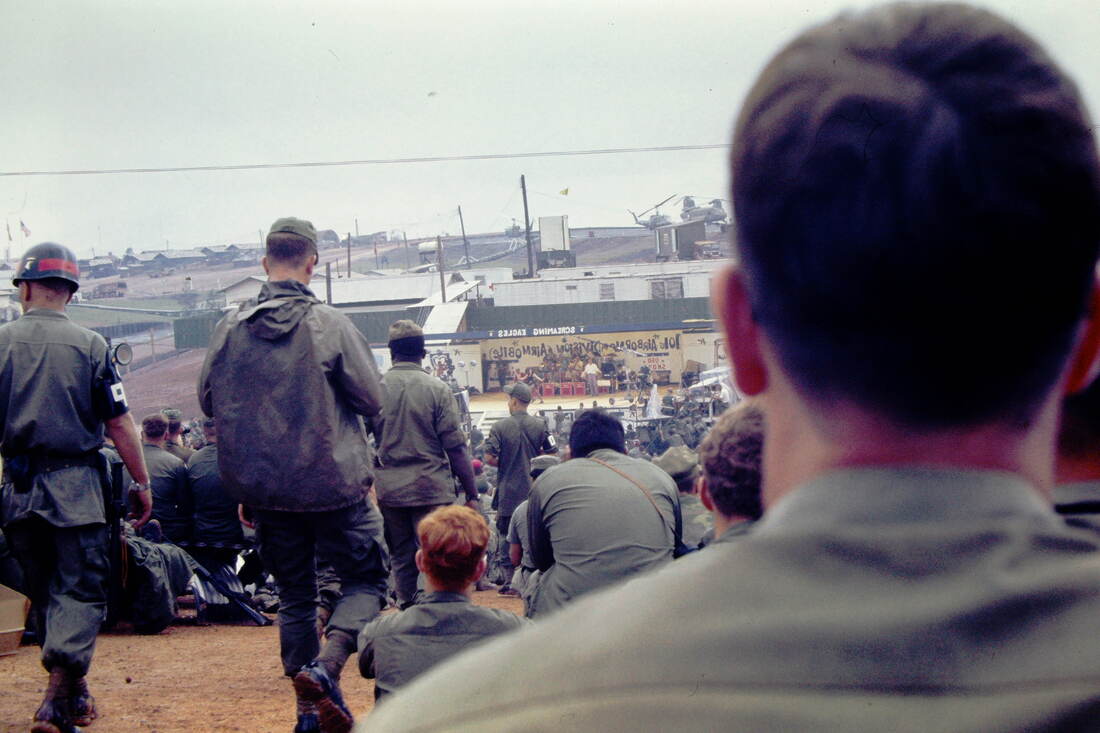
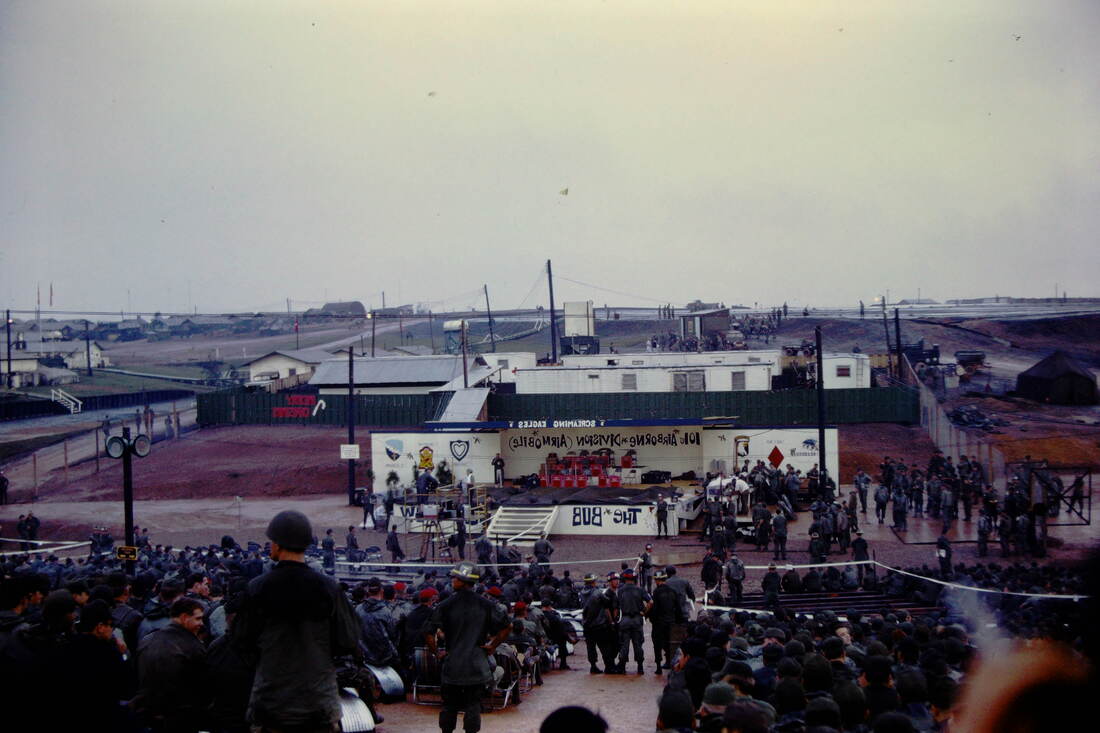
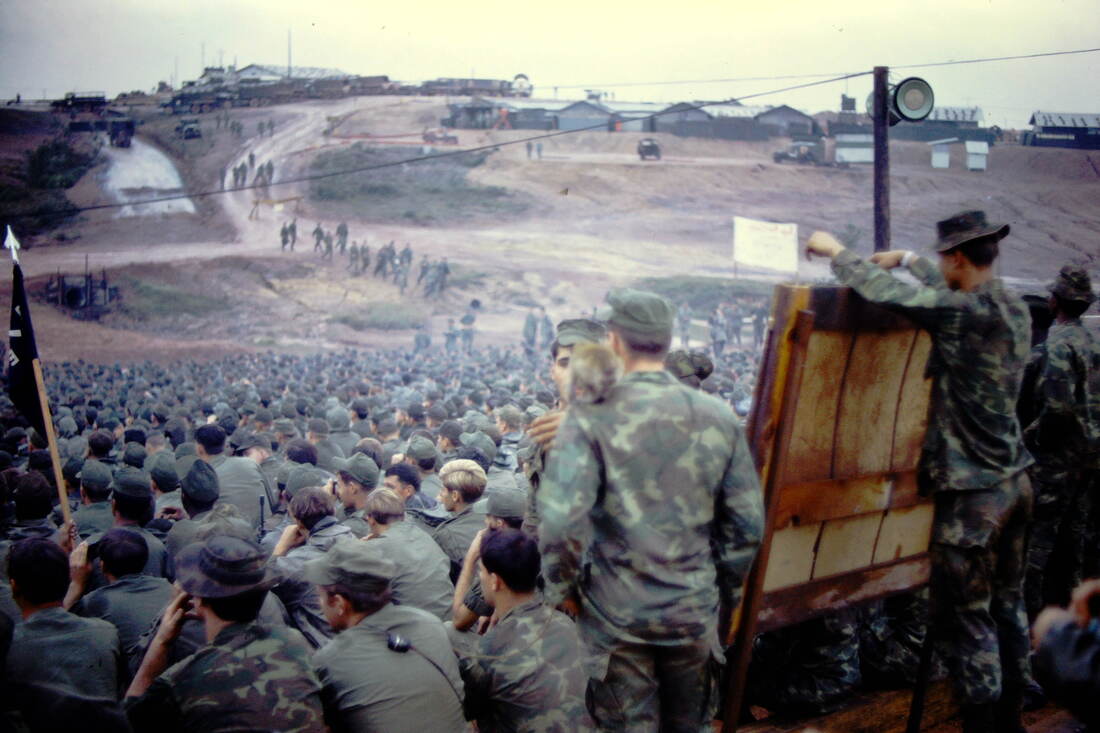
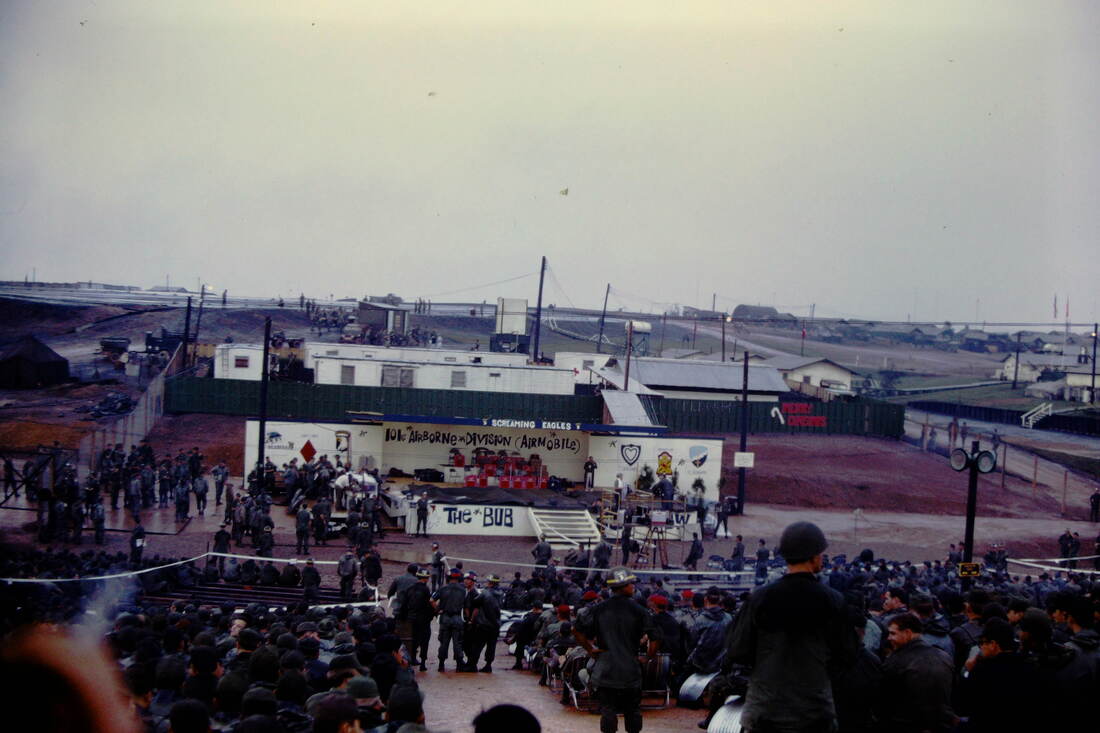
I went through basic training at Fort Leonard Wood in Missouri during the winter of 1968-69. The majority of trainees in my basic training class were not going to Vietnam; they were in either the National Guard or the Army Reserve and were going back home after their training. We had a black drill sergeant, and I still had a pretty strong southern accent justifying my Prin nickname of “Mobes” for saying my hometown of Mobile, Alabama, with such a drawl that nobody at Prin could understand it. Because I had been to college and was going on to OCS (Officer Candidate School), the drill sergeant made me a squad leader. As the training went on, it turned out that most of the other trainees who were going on into the regular Army and then to Vietnam were black. The drill sergeant ended up putting all the blacks in my squad, presumably to make us all learn to live with each other. One man in my squad was from the old Pruitt-Igoe slum housing development in St. Louis. He periodically threatened to kill me by having an accident at the firing range. The drill sergeant had us fight each other with pugil sticks, giving him the chance to beat the tar out of me. But he remained in my squad, and we continued to make it through basic training. At the end of our training, we made identical scores on our physical training test, and he congratulated me. I was amazed. It seemed as if we had developed some kind of a bond, thanks largely to our black drill sergeant who was good at his job, and we moved on to the next stage of our Army careers. I remember flying home to Mobile on leave, probably for Christmas, on the same plane with an old high school classmate who was also in training at Fort Leonard Wood. He had also finished one year of law school, but was in the National Guard, going back home after training, not to Vietnam. He went on to become attorney general of Alabama. From Fort Leonard Wood, I went to Fort Sill, Oklahoma, for Advanced Individual Training in artillery. Compared to basic training, AIT was relatively uneventful. The main thing I remember is that one of the men in our unit was a professional, minor league baseball pitcher, whose main job seemed to be to pitch for the company baseball team and who seemed destined to stay in AIT forever. From AIT, I moved to artillery officer candidate school at Ft. Sill. I was serious, but I was influenced by the general anti-war feeling in the country, so that I was not inclined to put up with a lot of foolishness, and it seemed like there was a lot of foolishness at OCS. I was pretty constantly in trouble, and the main penalty for being in trouble was being forced to run something they called the JARK. It consisted of running 4.2 miles up what they said was the highest mountain in Oklahoma (a medium sized hill) with a full pack, combat boots, etc. However, I did it so often that I could pretty much do it with my eyes closed, and it probably meant that I was in the best physical shape of my life. In addition, I could knock off twenty-five or fifty fairly decent pushups several times a day. About half way through OCS, there was a big celebration of the first Air Force “Ace” who had shot down the requisite number of enemy planes. It turned out that he had a mustache, which until then had been banned by the military. Because the publicity said that mustaches would now be allowed, I started growing one. It took a few days for anybody to notice, but when they did, all hell broke loose. I did enough pushups and jarks that I could no longer be blasé and my muscles began to notice— not to mention my response to cleaning latrines and doing any other terrible things that the OCS instructors could think of. But I was still in the program. That ended, however, when a few weeks before graduation our whole company was restricted to the barracks during a three day weekend on some general principle that we weren’t good enough to deserve any free time. I decided to take food orders and get everybody burgers and fries from a hamburger stand on base. I thought that if I did not leave the base, I would get in trouble, but not get thrown out of OCS. I was wrong. I got thrown out, along with about ten of my colleagues. One ended up being one of my best friends. His offense was to go outside the barracks to speak to his wife in the company parking lot while she sat in the car. When we started OCS, there were several candidates from Ivy League schools, one from Cal Tech, and my friend who had finished one year of law school, as I had. I don’t think anyone who had gone to an elite school or who was working on an advanced degree finished OCS. I think this was at least partly due to the fact that the war was starting to wind down. When we had signed up for OCS about a year earlier, it had looked like the US would need more officers than it did as graduation approached. So, the class took a big hit about a week before graduation. For most of us it was not entirely bad, because we reverted to a two-year service obligation. Getting kicked out of OCS was a guaranteed ticket to Vietnam. My law school colleague and I ended up with basically the same orders, sending us to Dong Ha, Vietnam, near the DMZ (demilitarized zone). We ended up as “chief computers” for two different batteries in the same heavy artillery battalion. Chief computers were specialist-5 section chiefs who ran the fire direction centers of the artillery units. The fire direction center talked to the troops in the field and figured up the data to send to the guns to shoot the fire missions requested by the troops in the field, or more often from some intelligence officer back in the rear. Since artillery usually cannot see what it is shooting at, the fire direction center figures a direction and elevation that the guns apply from a fixed reference point to hit the target. It is basically an exercise in trigonometry that could be done easily and instantaneously by a calculator or computer today, but was more difficult back then. We did have computers to figure the data, although we always had to double check them by figuring the data by hand. The FADAC computers were about the size of a footlocker, ran on several car batteries that had to be charged continually, and displayed their results in old nixie tubes that contained light bulb filaments shaped like numbers. We arrived from the US at Cam Ranh Bay, where we waited for a plane to Dong Ha. I remember looking at a map there, where the dot for Dong Ha would not fit entirely in South Vietnam, but jutted across the DMZ into North Vietnam. This was what the Army called northern I Corps. From Cam Ranh Bay we flew to Da Nang, where I was amazed at the busiest airport I had ever seen, with fighter jets and transports tailgating each other down the runway. In the terminal, however, things looked pretty normal. Everybody was pretty clean and relaxed looking. One soldier, though, looked like someone out of the old Willie and Joe cartoons from World War II. He was dirty, his uniform was ragged, and he had a glazed, far-away look in his eye, the only one like that of the hundreds in the airport. My friend asked him where he was from. It turned out that he was from the DMZ. When my friend told him we were going to Dong Ha, he said something like, “I just came from there. I heard the A-2 base was overrun the night before last. I suppose you are going to replace some of the men who were killed there.” We were not pleased to be going to where the one man in the airport who looked like he had been in a war had just left I remember flying into Dong Ha on a C-123 transport plane. I don’t know whether the pilot was putting us on or not, but he said that they had had a lot of planes blown up on the ground in Dong Ha, so they were not going to stop. They would land, slow down, lower the back cargo door, and we should grab our stuff and run away from the plane as fast as we could. We did, and the plane accelerated and took off without turning around. There we were in the bright sunshine, in the middle of a quiet, green grassy landing strip that could have been a park in any American city. That night we joined twenty or so other men in a tent waiting for assignment. There was a lot of drinking and poker playing going on despite some shooting heard outside, until someone came running in to say that we were under mortar attack and Vietcong were using the lights in our tent as their target. The next day I was assigned to A battery of the 2/94th Artillery, a heavy artillery battery with eight inch howitzers and 175 mm guns, which was stationed with one brigade of the 101st Division at LZ Sally, in the A Shau valley near the town of Quang Tri. It felt pretty good to be stationed with 101st Airborne. The LZ Sally base camp was on a ridge looking north, and we could often watch the firefights in the valley below. From our safe distance the tracers were like a fireworks show. There was another fireworks show every night when another artillery battery would adjust fire for defensive targets on our perimeter using white phosphorous rounds which lit up the sky so that you could see them easily. During one firefight, the battleship New Jersey was off shore, and she joined us in providing support to the troops in the field. When we talked to her on the radio, it was like listening to a commercial FM station back in the states, compared to the weak hissing and cackling communications we had with individual forward observers with the infantry. When it shoots close support for troops, an artillery battery tells them, “Shot” when the guns fire and “Splash” about five seconds before the rounds hit, so that they know to duck to avoid shrapnel from the friendly fire. When the New Jersey told the troops, “Splash,” everyone in our battery who could, ran outside to try to see the 2,000 pound rounds go off, but we never saw or heard them. There were some Cobra helicopters stationed on the LZ which would periodically go out and shoot at stuff on our perimeter. Watching the Cobra miniguns fire a solid stream of tracers was pretty impressive. Even more impressive was watching the occasional visit of “Spooky” to shoot around the perimeter. An even bigger column of tracers streamed out of the side of the converted cargo plane. During these operations there were usually loud speakers broadcasting the “Chieu Hoi” invitation to the enemy to surrender. After a few months, we parted ways with the 101st and went off on our own to an old Marine fire base called LZ Sharon. The Vietnamization of the war was starting, so instead of American infantry protecting us we had Vietnamese troops and American air defense artillery. At LZ Sharon, the Vietnamese troops were draft dodgers who had been caught, but the Vietnamese Army would not give them guns; so they had clubs and knives. Our air defense artillery was a quad-50 machine gun, four 50-caliber machine guns mounted together on the back of a five-ton truck. Because it was closer, when it fired the tracers made almost as good a fireworks show as the platoons of infantry back at LZ Sally. For some reason, probably because as chief computer I was pretty good at calculating how to aim artillery, I had my own eighty-one mm mortar. However, I only had illumination rounds to support the quad-50; I did not have any high explosive rounds. Most of our battery’s shooting was done at night. Usually around 4:00 in the morning everything would quiet down, and the guys on the quad-50 and I would be about the only people awake. I would shoot some illumination rounds along our perimeter and the quad-50 guys would look for any movement. If they saw any movement, we would have to clear a whole map “grid square,” a square kilometer, with higher authorities before the quad-50 was allowed to shoot. It was not exactly rapid response, but perhaps it let the bad guys know, if there were any out there, that somebody was awake. We were at LZ Sharon during monsoon season, and the moisture meant that the powder in the eight-inch howitzers burned more slowly. As a result there was usually a huge flash as the projectile left the barrel and the unburned powder hit the air. In our fire direction center, the explosion would make the dust on the desks and the floor rise up about an inch and then settle back down. One night, after a particularly loud shot, the plywood walls of the “hooch” where we were working fell off, and we were left standing in the two-by-four framing in the middle of the night. I think it was while we were at LZ Sharon that I saw Bob Hope’s Christmas show in December 1969. It was at the Phu Bai combat base near Hue, which was a long drive for us. I don’t remember much except telling my mother to look for me on TV, sitting about ten rows behind the guy with a monkey on his shoulder. She always claimed that she saw me, although it was unlikely in that sea of uniforms. Still, it was very patriotic of Bob Hope to come, and it was encouraging when there was so much opposition to the war to feel that there was someone publicly supporting us. From LZ Sharon, we moved to Firebase Barbara on a mountaintop west of Quang Tri, close enough to Laos that we could shell the Ho Chi Minh trail that ran along the border. At Barbara we had two eight-inch howitzers and two 175-mm guns. The eight -inchers could fire about ten miles, and the 175s about twenty miles, but less accurately. They gave us pretty long coverage up and down the Ho Chi Minh trail. We also did more close support of American troops than we had done since we had parted from the 101st division. I never knew who we were shooting for, but they sounded like Special Forces, if only because they were so calm in combat. We would be adjusting fire for them, walking the rounds in closer, and they would very calmly say something like, “They are in the wire, too close for you to shoot at now; you’ll have to wait awhile.” I only learned from a Time magazine subscription I had that an American Special Forces base at Mai Loc had been overrun. I recognized the name because it was marked on our charts as a no-fire zone. I wondered why we had not been asked to shoot support for them, but I realized that they were east of us and our battery was designed to shoot west, terraced down the western side of the mountain. If we had tried to shoot east, we would probably have blown off the top of the mountain. Somebody on the internet says that former Secretary of Veterans Affairs General Eric Shinseki (then Captain Shinseki) was sent to relieve Mai Loc, but obviously didn’t make it in time. One night we received a warning from our battalion headquarters back in Dong Ha that intelligence (probably infra-red sensors) showed a large group of enemy soldiers assembling at the bottom of our mountain. At Barbara, we had swapped our old anti-aircraft quad-50 weapon at Sharon for a pair of “dusters,” old anti-aircraft tracked vehicles that fired twin forty-mm cannons, again a steady stream of tracers. Because these anti-aircraft artillery units were almost always stationed in the “boonies” in somewhat dangerous locations, they had a reputation as “space cadets,” who didn’t pay much attention to doing stuff by the book. They were our main defense, although in theory we also had Vietnamese infantry to defend us. After the attack warning, our battalion supply officer in Dong Ha came on the radio to tell us not to give any gasoline to the dusters. We had gasoline to run our fire direction center generators. He said it was too difficult to resupply us, and the dusters were notorious for not maintaining their supplies. However, we decided that if the dusters were our main line of defense, we were going to give them all the gas they needed. The dusters blew away a grid square (a square kilometer) or more where the intelligence said the enemy was forming, and no attack occurred. We never knew whether we had averted an attack or the intelligence had just picked up a herd of deer grazing at the bottom of the mountain. I think Barbara is the only place I remember seeing an air strike by Phantom jets. They bombed one of the mountains nearby, but we never knew why. On April 29, 1970, while we were firing at something on the Ho Chi Minh trail, the breech blew out of one of the 175-mm guns, killing two of the crew and wounding several others. The names of those who died, Paul Kosanke and Willie Austin, are listed on the wall of the Vietnam memorial. A more pleasant memory was when a helicopter flew out a huge bladder of water, which it tried to drop on the mess hall, a bunker. He dropped it from too high up. It bounced off the roof of the mess hall and rolled down the mountain. Later, a flatbed truck made it all the way to the base along the dangerous, often-mined road back to the coast, carrying a new “tube” (barrel) for one of the 175-mm guns. He was almost at the top of the steep, winding road up the mountain, when the tube began to slip off the back of the truck, and it too rolled down the mountain. Since it weighed several tons, it’s probably still there. From Firebase Barbara we went back near Dong Ha, to Charlie-1, one of the bases along the DMZ. It was in theory the safest of these bases because it was the southern-most and eastern-most of this line. Those closest to the DMZ were labeled A, as in A-1, A-2, etc. The next line were B bases, and the third and last line were the C bases. The numbering started from the east, near the coast with 1, and went up as you went west. Presumably Khe Sanh would have been the western anchor of this line of bases. At Charlie-1 we did more shooting during the daytime. Often an Air Force forward air controller would fly up and down the DMZ in a small plane like a Cessna. If he found something big, he would call in an air strike, but if he found something small he would call us. Often he would call a fire mission on “footprints in the sand.” We would start shooting where he said the footprints disappeared, and usually someone would emerge running back toward North Vietnam because they knew that we were forbidden to shoot into North Vietnam. We would try to get him before he could get back to the river dividing the north from the south. At least once, maybe more times, the Air Force would fly what we called an Arc Light mission. A fleet of B-52s would fly over the DMZ and carpet bomb it. The rumble and shaking was like an earthquake. We could see many vapor trails in the sky, but I don’t remember their being challenged by the North Vietnamese. As I neared the end of my two year hitch, the Army offered a deal to let people out a few weeks early to go to school. I needed to leave a few weeks early to make it to the first day of law school. I wrote to both the University of Georgia, where I had finished my first year, and the University of Alabama, where I was a state resident. For some reason, Alabama replied quickly and said that they would accept me. I used the Alabama paperwork to get my early release approved. Just before I left Vietnam, Georgia finally replied that I could return, but by then the paperwork for Alabama was done. It turned out that my friend from OCS had done the same thing, and we left together for law school in Alabama. When I had first arrived in Vietnam, the officer in charge of the fire direction center had persuaded me to sign for all of the equipment in the section. His argument was that if anything went missing, he as an officer would be personally responsible, while I as an enlisted man would not be. He had been a forward observer at Khe Sanh and had a silver star; so I agreed. The equipment included our generators, computers, radios, an M-60 machine gun, but also an M-577 mobile command post (an armored personnel carrier with a high roof) and a trailer to carry the generators. On an artillery raid, the trailer axle broke, and I gave it to the motor pool sergeant to repair. He either buried it or sold it on the black market. After I had been in law school in Tuscaloosa for a few months, I got a “report of survey” from the Army billing me about $1,000 for the missing trailer. I went to see an Army lawyer at nearby Ft. McClellan. He gave me some forms to fill out, and I never had to pay, but the Army had followed me to law school. |
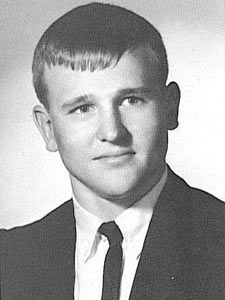
AuthorI am on the top right Archives
April 2026
Categories |
 RSS Feed